Grey Water Damage in Brookshire: Category 2 Cleanup Stories
Grey water is the middle category, and that is exactly what makes it dangerous. It is not the clean supply line water you can mop up with towels, and it is not the raw sewage that demands full hazmat protocols. It sits between them, contaminated enough to make you sick, clean enough that homeowners in Brookshire routinely underestimate it and try to handle it themselves. By the time they call Brookshire Water Restoration, the contamination has often spread into drywall cavities, subfloors, and HVAC returns where it quietly turns into a Category 3 problem.
At Brookshire Water Restoration, we have walked into hundreds of Brookshire homes where a dishwasher discharge, a washing machine overflow, or a slow toilet supply leak created exactly this scenario. The homeowner ran fans for two days, the surface looked dry, and the smell started on day four. We are IICRC certified, BBB A+ rated, and we have been doing this work across Central Indiana since 2018. If your loss is genuinely small and safe to handle yourself, we will tell you that on the phone. If it is not, you need to understand what Category 2 actually means before you make decisions that your insurance adjuster, and your lungs, will question later.
Problem: You Cannot Tell If Your Water Is Category 2 or Something Worse
Most homeowners in Brookshire call us describing water as clean or dirty, but IICRC uses three categories. Category 1 is clean water from a supply line. Category 2 is grey water with contamination from soaps, detergents, urine without feces, washing machine discharge, dishwasher overflow, aquarium leaks, or sump pump discharge from rainwater that has touched soil. Category 3 is sewage or floodwater. The trouble is grey water turns into black water in roughly 48 to 72 hours once bacteria multiply, especially in Brookshire basements during humid summer months.
Temperature accelerates the problem. A finished basement sitting at 72 degrees with a soaked carpet pad becomes a bacterial incubator faster than most people realize. If the source water sat in a drain line, a P-trap, or a washing machine standpipe before reaching your floor, it already carries a heavier microbial load than the visible appearance suggests. That is why we never rely on what the water looks like to make the call.
Solution: Selective Removal Plus Antimicrobial Treatment
Our standard protocol on a grey water job follows three steps:
- Extract all standing water with truck mounted or portable extractors, depending on access. A typical 400 square foot basement extraction in Brookshire runs within 2 hours.
- Remove and bag contaminated porous materials. Carpet pad almost always goes. Carpet itself can sometimes be saved if we reach it within 24 hours and apply a hot water extraction with EPA-registered antimicrobial.
- Apply a broad spectrum antimicrobial to all affected surfaces, including subfloor, wall cavities, and structural framing.
If your washing machine caused the loss, the steps we take overlap heavily with our washing machine flood repair process, including checking the supply hose, drain pump, and floor pan for ongoing leaks.
Problem: The Smell Comes Back Weeks After the Floor Looks Dry
One of the most common follow up calls we get is from homeowners who handled a grey water loss themselves, thought it was finished, and now notice an odor returning in warm weather. That smell is bacterial activity inside materials that were dried but never decontaminated, or pockets of moisture that were never reached in the first place.
Solution: Treat Every Grey Water Loss Like a Time-Sensitive Job
When our crew arrives, we test moisture levels, identify the source, and document the category before any equipment runs. That documentation matters for your insurance claim and for choosing the right cleaning protocols. If the source is ambiguous, we treat it as the higher category to protect your family. You can read more about how we approach water damage restoration across every category, but the core rule for grey water is simple: extract within 24 hours, sanitize properly, and dry aggressively.
Solution: Moisture Mapping and Controlled Structural Drying
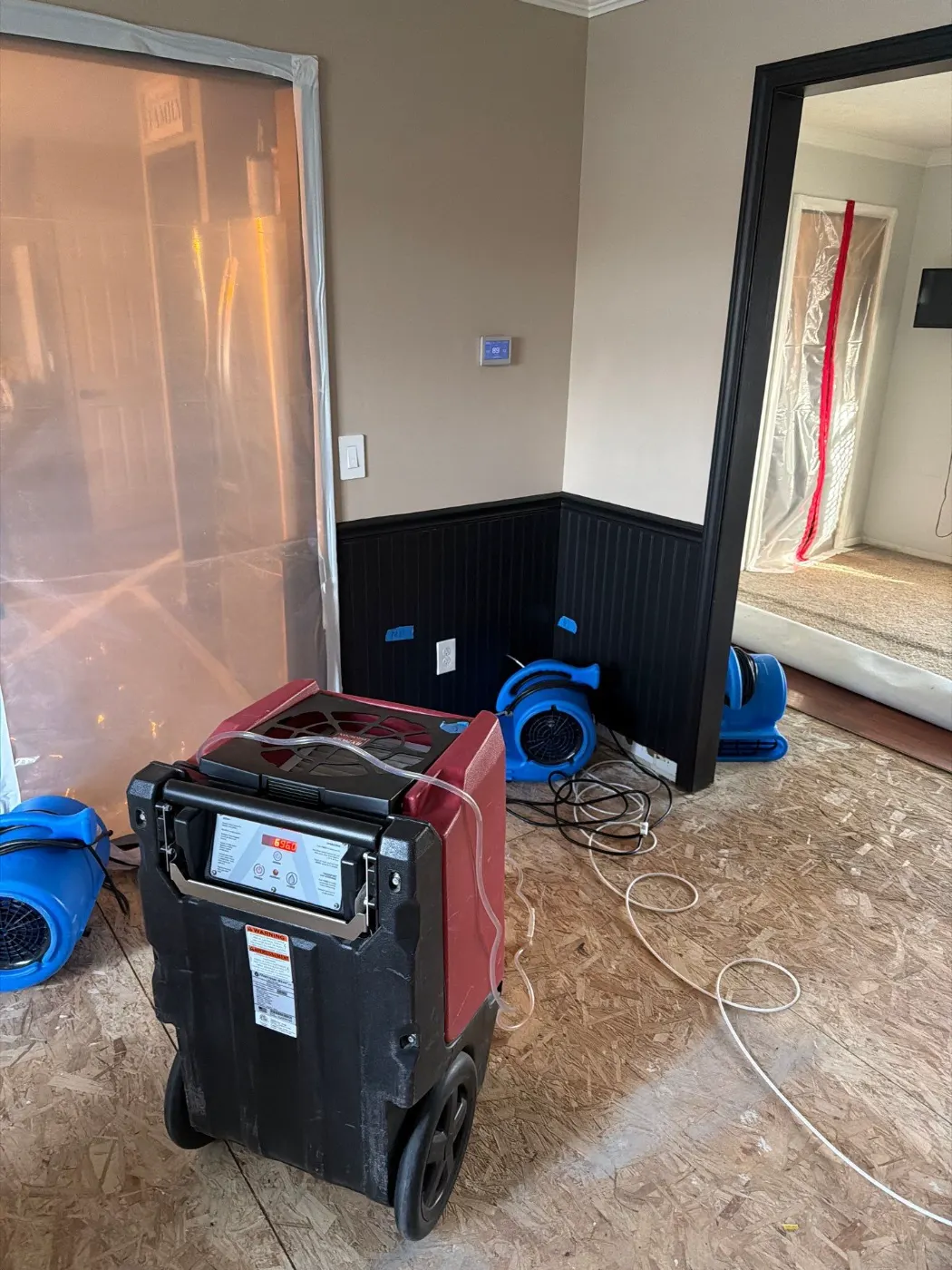
We use thermal imaging cameras and pin style moisture meters to map every wet pocket in your home. Then we set up containment, deploy commercial air movers (usually one per 50 to 60 linear feet of wall), and run LGR dehumidifiers sized to the cubic footage. Most Brookshire grey water jobs dry in three to five days with daily moisture checks. We do not pull equipment until readings hit our drying goals based on unaffected reference areas in the same structure.
Problem: Insurance Adjusters Want Specific Documentation You Probably Do Not Have
Grey water claims under homeowners policies are often covered when the loss is sudden and accidental, like an appliance failure. But adjusters want category classification, moisture readings, photographs of affected materials, drying logs, and a clear scope of work. If you call a general handyman or a carpet cleaner, you will not get that paperwork, and your claim can stall or get denied.
Solution: Full Claim-Ready Documentation From Hour One
Every Brookshire Water Restoration job includes a complete documentation package: psychrometric readings, category determination per IICRC S500, daily moisture logs, before and after photos, and an itemized scope with Xactimate aligned pricing. We have worked with most major carriers serving Brookshire and can communicate directly with your adjuster if you want us to. For a deeper look at what restoration actually costs, our water damage cost breakdown walks through typical Category 2 pricing ranges so you know what to expect before the adjuster calls.
Problem: Porous Materials Absorb Grey Water and Hold Contamination
Carpet pad, drywall, insulation, particleboard cabinets, and engineered hardwood all soak up grey water within minutes. Once contaminated, these materials cannot just be dried. They harbor bacteria deep inside their fibers, and surface cleaning will not reach the embedded contamination. Homeowners often try to save a soaked carpet pad with a shop vac and a fan, then call us a week later when the smell gets worse and mold spots appear along the baseboards.
Upholstered furniture creates the same problem. A sofa that wicked grey water up its skirt for six hours has contamination running through the frame, the deck padding, and the lower cushions. We have seen homeowners shampoo the visible fabric and assume the piece was saved, only to discover a sour smell weeks later that no cleaner can remove. The honest answer on heavily contaminated upholstery is often replacement, and your policy may cover it if we document the loss properly.
Problem: Hidden Moisture in Walls and Subfloors Keeps Causing Damage
Grey water travels. It wicks up drywall 12 to 24 inches above the waterline, runs along floor joists, and pools under tile or laminate where you cannot see it. You will notice the surface looks dry within a day or two, but moisture meters tell a different story. Trapped moisture leads to mold growth, warped subfloors, and recurring odors that no amount of bleach spray will fix.
The pattern we see most often in Brookshire homes involves baseboards that look fine on the outside while the bottom plate of the wall behind them sits at 40 percent moisture content. Within two weeks, paint starts bubbling, nails rust through the drywall surface, and a musty smell drifts through the room every time the HVAC kicks on. By that point, the repair scope has doubled because mold remediation gets added to the original water job.
Get Grey Water Cleaned Up Right the First Time
Grey water damage will not wait. Every hour it sits, the contamination spreads, the drying job gets harder, and the bill climbs. Brookshire Water Restoration runs 24 7 emergency response across Brookshire with IICRC certified technicians, calibrated equipment, and the documentation insurance adjusters actually want. Call us, send photos, and we will give you a straight answer about what your property needs. If it is a small loss you can handle yourself, we will say so. If it needs a full Category 2 protocol, we will be at your door fast.
Solution: Post-Drying Verification and Odor Control
On every Brookshire Water Restoration job, we return for a final inspection after the equipment comes out. We retest moisture levels, inspect the materials we treated, and apply an odor counteractant if any residual smell remains. If you are still smelling something three weeks later, call us back. A properly completed Category 2 job should leave your home smelling like nothing at all.
Frequently Asked Questions
How is Category 2 grey water different from Category 1 or 3?
Category 1 is clean water from a supply line. Category 2 (grey water) contains significant contamination from sources like dishwashers or washing machines and can cause illness. Category 3 (black water) includes sewage and floodwater. In Brookshire homes, untreated Category 2 becomes Category 3 in 48 to 72 hours.
Will my insurance cover grey water cleanup?
Most homeowner policies in Brookshire cover sudden and accidental grey water discharge from appliances or plumbing. Gradual leaks over 14 days, flood-source water, and unmaintained equipment are often excluded. Brookshire Water Restoration provides Xactimate-formatted documentation that maps directly to your adjuster's worksheet.
Can I clean Category 2 water myself?
Small spills under 10 square feet caught within an hour can sometimes be handled with shop vacs, antimicrobial cleaners, and fans. Anything larger, anything that reached drywall or subfloor, or anything sitting more than a few hours needs professional extraction and structural drying to prevent mold.
How long does Category 2 cleanup take in Brookshire?
Extraction is typically completed in 2 to 6 hours. Structural drying runs 3 to 5 days with daily monitoring. Demolition and rebuild, if needed, add another 1 to 3 weeks depending on materials and scheduling.
What if the grey water reached my HVAC system?
Affected supply and return registers are sealed immediately. Brookshire Water Restoration coordinates duct inspection and, if needed, cleaning before the system runs again. Running an HVAC system contaminated with grey water spreads bacteria through the entire Brookshire home and can trigger respiratory issues.
Have a restoration question?
Our IICRC certified Brookshire crew is ready to help. Free assessments, estimate based on what we can sees, no pressure.